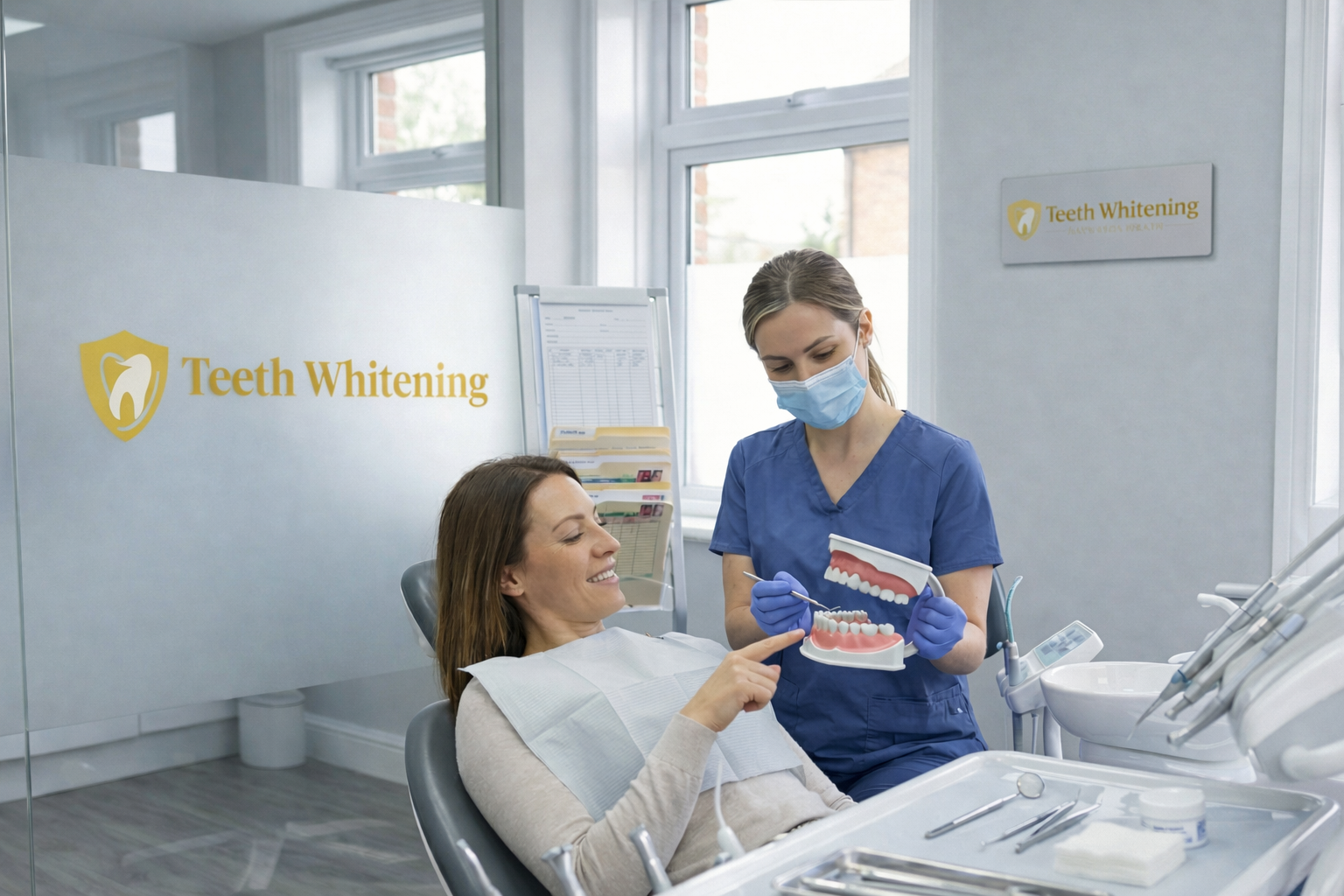
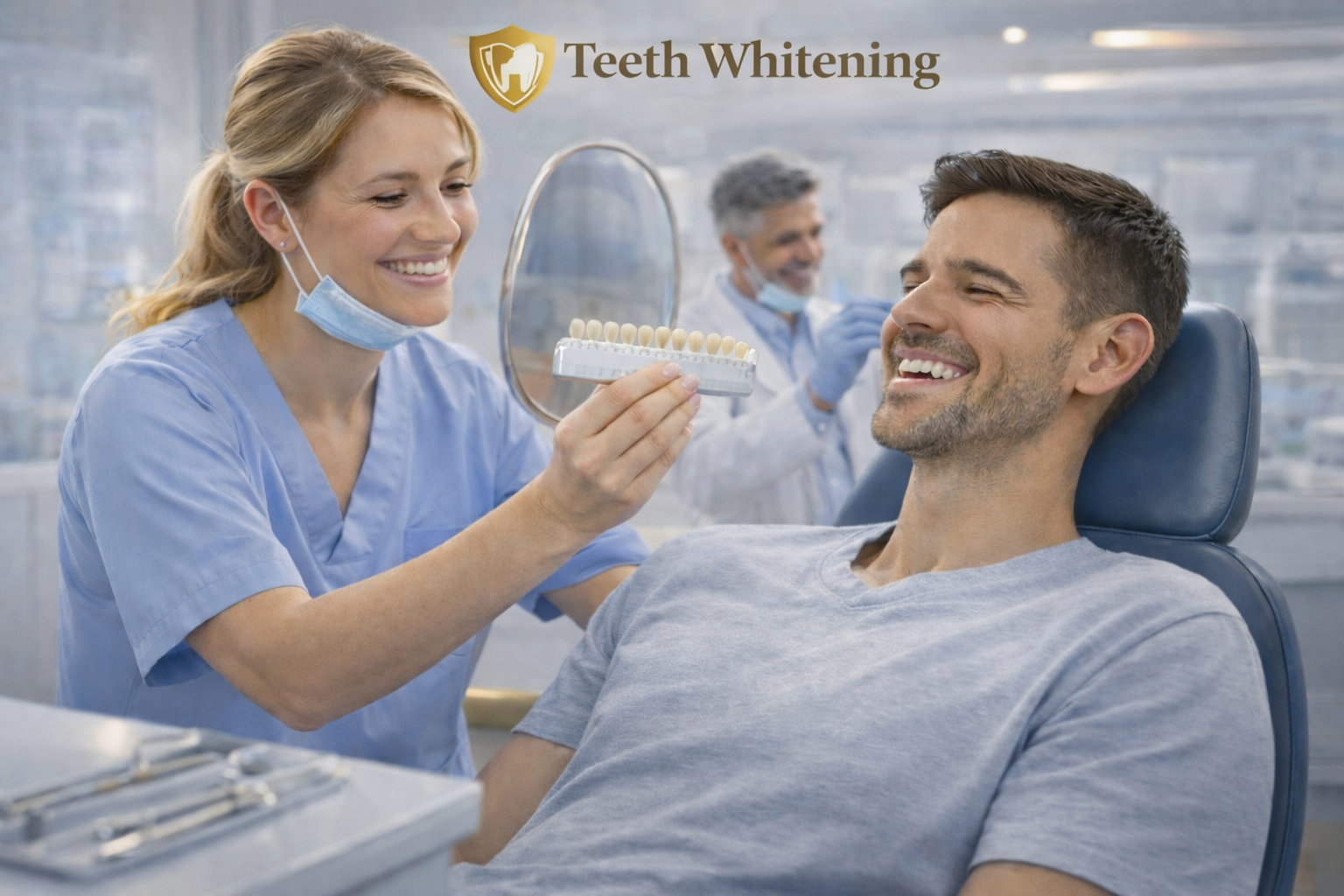
Imagine walking into a room and smiling without thinking twice — a smile that feels natural, flattering, and unmistakably yours. Our single-session, clinic-grade whitening treatment delivers visible, realistic improvement in roughly 60 minutes while keeping sensitivity low.
A smile is often the first human signal we use when we meet someone. It conveys warmth, approachability, and trust. When you feel comfortable showing your teeth, it affects how others respond and how you feel about yourself. Many small social gestures — the quick closed-lip smile at a meeting, the camera-shy laugh at a party — are rooted in a quiet self-consciousness about tooth colour.
Quick Facts at a Glance
Session length:
Approximately 60 minutes (consultation to finish).
Typical improvement:
5–12 shades (individual results vary).
Sensitivity:
Low to none with buffered, low-sensitivity gel and remineralising finish.
Technology:
Cold blue-spectrum LED activation; non-abrasive oxidation chemistry.
Offer:
50% off the first whitening session for new clients.
Location:
UK — easy local parking, evening & weekend slots often available.
We keep facts transparent: results depend on stain type, restorations, and dental history. We'll give you a realistic expectation during consultation.
Is Your Smile Holding You Back? The Problem — And a Practical, Human Solution
Why Smiles Matter
A smile is often the first human signal we use when we meet someone. It conveys warmth, approachability, and trust.
When you feel comfortable showing your teeth, it affects how others respond and how you feel about yourself. Many small social gestures — the quick closed-lip smile at a meeting, the camera-shy laugh at a party — are rooted in a quiet self-consciousness about tooth colour.
The Reality of Enamel Discoloration
Tooth colour changes for many natural reasons. As enamel gradually thins with age, the dentin beneath — which is naturally yellower — becomes more visible. On top of that, modern diets and daily habits accelerate staining.
Common staining sources include:
Coffee and tea
Tannins stain enamel at a microscopic level.
Red wine and dark juices
Pigmented molecules embed in enamel pores.
Cola and dark soft drinks
Strong dyes and acids that darken over time.
Smoking and vaping
Tar-based deposits that are stubborn and brownish in tone.
Strongly pigmented foods
Curries, tomato-based sauces, beetroot, and dark berries.
Why Common DIY Approaches Fall Short
Over-the-counter whitening strips, charcoal pastes, and abrasive toothpastes often promise rapid results — but they typically only work on the most superficial stains.
Many of these products remove surface film with abrasive action, which can roughen enamel and increase sensitivity over time. They rarely change the intrinsic tooth colour — the stain molecules are bound inside the enamel matrix.
Clinic-Grade Whitening: A Different Approach
In our clinic, we use chemistry targeted at intrinsic staining combined with controlled activation (cold LED). The professional gel penetrates enamel and alters the pigmented molecules — not by scrubbing them away, but by breaking the bonds that give them colour.
This is why clinical whitening can deliver a clearer, fuller change in a single hour — and why we emphasise a natural look rather than "Hollywood white."
Our focus is human: a realistic lift in shade that complements your face and looks great in photos, at meetings, and in daily life.
The Science — How Professional Whitening Works
Oxidation Over Abrasion
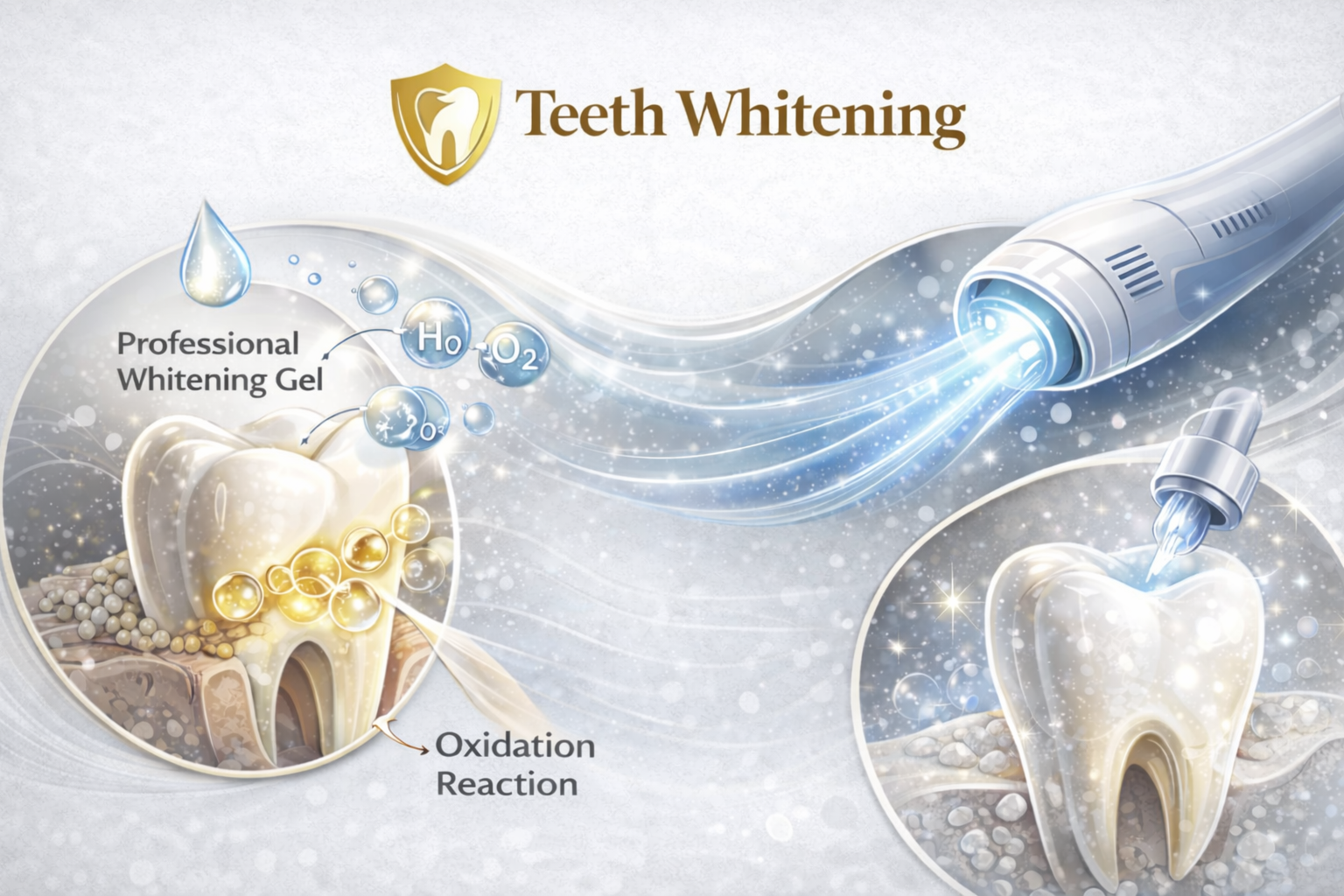
Put simply, professional whitening uses a controlled oxidation reaction to change the molecules that cause colour inside the tooth. Imagine the pigment molecules that make teeth look darker as tiny stains sitting in microscopic pockets. The professional gel contains active ingredients that travel into those pockets and then chemically alter the stains so they no longer reflect dark colour. Popular active agents in professional gels include stabilized peroxide formulations and carbamide peroxide variants formulated for lower sensitivity. We use low-sensitivity carbamide blends that give powerful results with less chance of sharp sensitivity.
Why We Use Cold Blue LED
The LED light serves as a catalyst. Cold blue LEDs (around 460–490 nm) speed up the reaction without generating heat. Older systems relied on high-heat halogen lamps, which sometimes caused discomfort by warming the tooth and pulp. Cold LED simply accelerates the chemical transformation without the thermal side effects, helping us keep clients comfortable.
Buffered Gels and Enamel Hydration
A key reason some people experience sensitivity after whitening is enamel dehydration and temporary opening of microscopic pores. Buffered gel formulas and shorter activation cycles reduce dehydration. We also apply a remineralising serum rich in calcium and phosphate after treatment to help close pores and support enamel recovery.
Remineralisation — The Finishing Touch
Remineralisation treatment is not optional in our protocol. After whitening, we apply a mineral-packed gel that helps seal micropores and reduce the window of sensitivity. It also gives immediate comfort and supports longer-lasting results, because the enamel recovers its resistance to pigment re-penetration faster.
Clinical Safety — What the Evidence Tells Us
Multiple clinical studies and dental guidelines show that professional bleaching performed with appropriate concentrations and safeguards is safe for enamel when followed by remineralisation. Sensitivity is usually temporary and manageable with modern protocols. If you have complex dental conditions, a short dental review before cosmetic whitening is the safest path — we can advise and coordinate with your dentist if necessary.
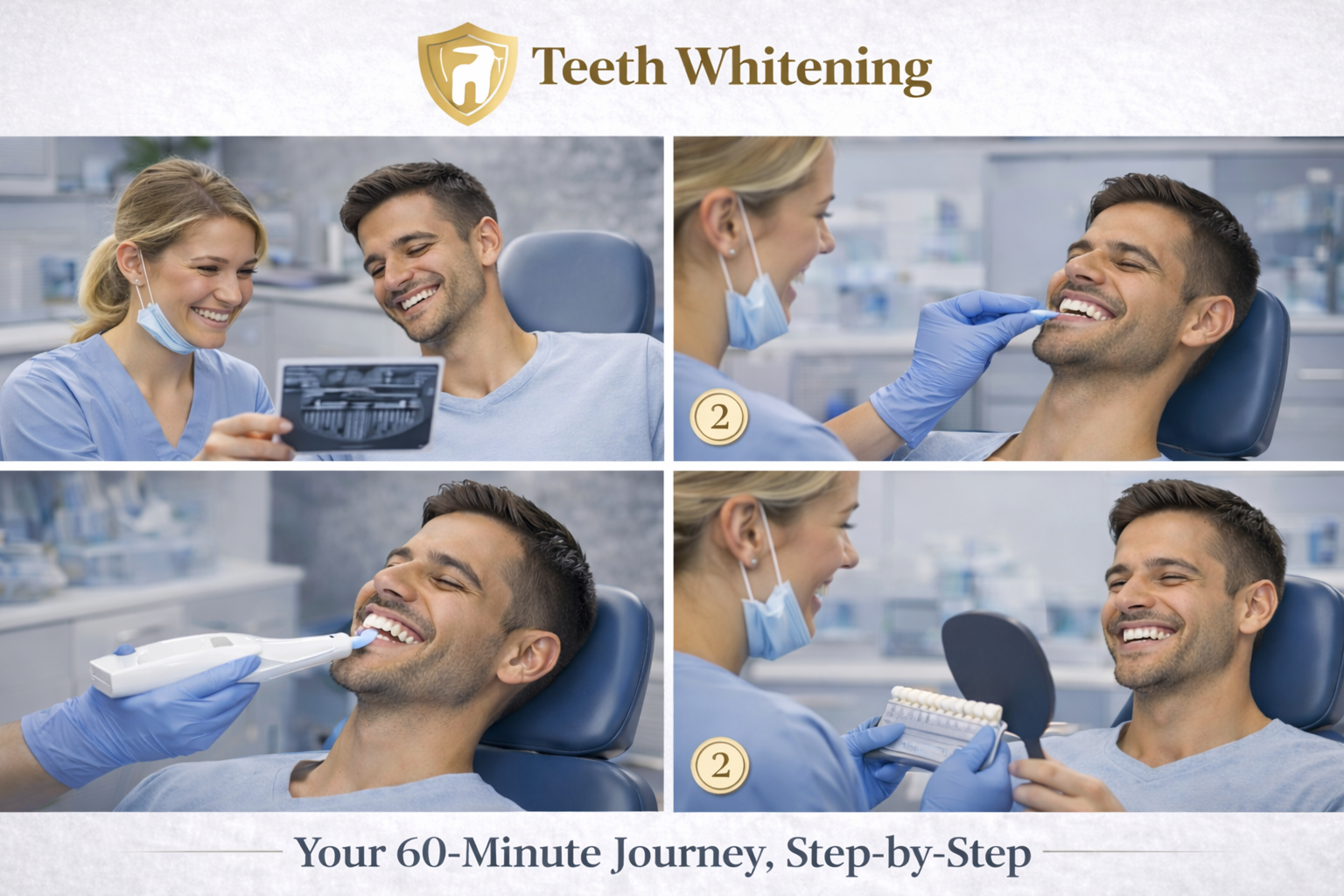
The Process — Your 60-Minute Journey, Step-by-Step
Overview — Calm, Professional, and Clearly Explained
We designed each session to feel organized and calm — it's a medical procedure told in plain language and performed with a relaxed clinic atmosphere. Below is a typical timing, but every session is tailored.
Arrival & Pre-Session Check (0–5 Minutes)
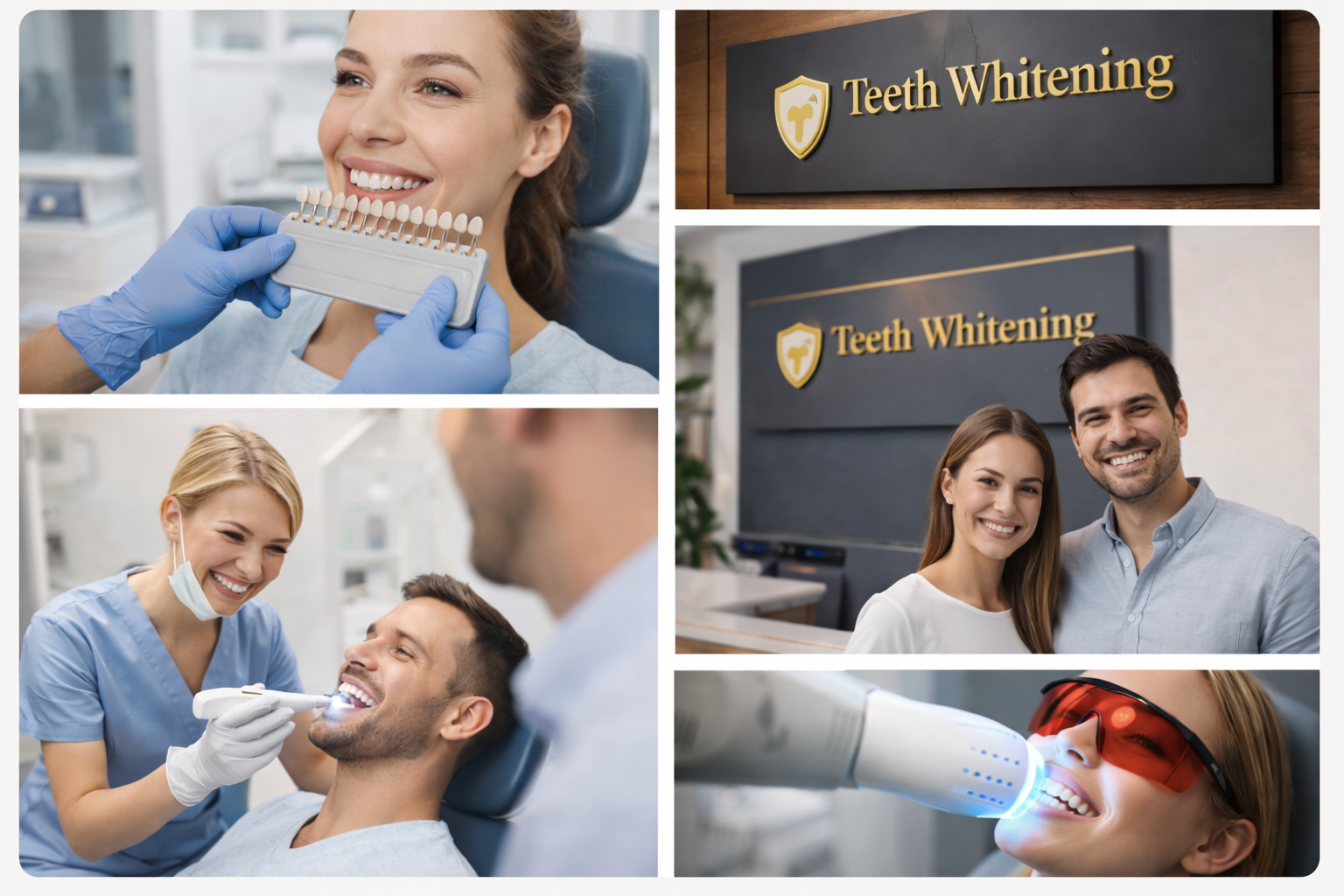
When you arrive, we greet you and invite you to a short consultation. We check your dental history, ask about any sensitivity, and confirm whether you have restorations in the front aesthetic zone (crowns, veneers, fillings). We log your starting shade using a professional shade guide to create a before-and-after map. This early communication sets realistic expectations and lets us customise the approach.
Preparation & Protection (5–12 Minutes)
Preparation is crucial. We clean any surface debris lightly and isolate the lips and cheeks for better access. A thin, light-cured gingival barrier is applied along the gumline — this rubbery seal protects soft tissue from accidental gel contact. Cheek retractors keep your lips and cheeks comfortably away from the active area.
Gel Application (12–15 Minutes)
The clinician places the whitening gel precisely on the visible teeth — usually the front eight to ten teeth that shape your smile. Precision matters: we place gel where it will deliver aesthetic benefit and avoid unnecessary exposure to areas that don't need treatment.
LED Activation Cycles (15–50 Minutes)
The LED lamp is positioned, and the first activation cycle begins (typically 15–20 minutes). We may remove and refresh gel between cycles and complete two to three cycles, depending on starting shade, sensitivity feedback, and desired lift. You can relax, listen to music, or close your eyes — many clients find this part restful.
Rinse, Reveal, and Remineralise (50–60 Minutes)
After the final cycle, the gel and barrier are gently removed and the mouth is rinsed. We show you the immediate result, compare it to the initial shade, and record the exact shade difference. We then apply a remineralising serum to close micropores and reduce sensitivity. You'll leave with specific aftercare and the "White Diet" instructions for the first 48 hours.
Follow-Up & Top-Ups
We recommend touch-ups depending on lifestyle; a short at-home maintenance kit or a 30-minute top-up session every 6–12 months helps keep the result near peak. We'll tailor a maintenance plan to your needs during your visit.
Professional Clinic Whitening vs DIY vs Dental Surgery — Which Fits You?
Choosing the right path depends on budget, risk tolerance, and how quickly you want results. Below is a detailed comparison to help you decide.
Drugstore DIY
Traditional Dentist
Our Clinic-Grade Cosmetic Whitening
Cost
Low (£10–£60)
High (£400–£1,200)
Moderate (competitive clinic pricing; best value)
Time to results
Days–weeks
1–2 sessions, often with custom take-home trays
Single 60-minute session with visible change
Sensitivity risk
Can be high (abrasives, improper fit)
Possible but clinically managed
Low — buffered gel, LED, remineralisation
Control & customization
Low
High
High (clinic protocol focused on cosmetic outcome)
Best for
Minor surface stains
Complex dental histories, medically supervised care
Our clinic-grade approach aims to deliver the highest cosmetic uplift with a low-sensitivity protocol and clear aftercare, making it the sweet spot for people who want fast, reliable results without the cost of surgical dentistry.
Safety, Contraindications, and Personalised Care
Common Safety Questions Answered
Will it hurt? Most clients report little to no pain. The combination of buffered gel, cold LED, and remineralising finish significantly reduces the risk of sharp sensitivity. For those with a history of sensitivity, we use gentler cycles and topical desensitizers when necessary.
Is it safe for enamel? Yes — when performed by trained clinicians using professional products and a remineralisation step. Whitening works by oxidising stain molecules, not by abrading enamel.
Who Should Avoid Treatment?
Some situations mean we will delay or decline cosmetic whitening until dental health is addressed:
Active cavities or untreated tooth decay.
Periodontal (gum) disease that is not controlled.
Recent oral surgery or dental trauma — we allow healing first.
Pregnancy and breastfeeding — as a precautionary policy we usually defer treatment.
Very young patients — teeth still developing in adolescents make whitening less appropriate.
Restorations — Crowns, Veneers, and Bonding
Important: dental restorations do not change colour with bleaching. If you have visible crowns or veneers, we discuss strategies: either match restorations after whitening or plan staged cosmetic restoration to harmonise your smile.
Am I a Good Candidate? A Practical Guide
Most adults with healthy enamel and gums are suitable for cosmetic teeth whitening. To help you self-assess, here are clear signs whitening may be a good option:
Signs Whitening Can Help You
You notice yellowing or dullness that doesn't respond to normal brushing.
Your discoloration comes mainly from diet (coffee, tea, red wine) or tobacco.
You're preparing for a major life event — wedding, graduation, photo shoot — and want a quick improvement.
You have healthy gums and no active tooth pain or untreated cavities.
When Professional Dental Consultation Is Recommended First
We recommend speaking with your dentist if you have:
Large or ageing restorations in the front teeth.
Active gum disease or signs of infection (bleeding, swelling).
Severe sensitivity that compromises comfort.
Free Screening — How We Handle Complex Cases
If you're unsure, we offer a short screening consultation where we check restorations, measure sensitivity, and give a personalised recommendation. If we identify dental issues, we'll advise treating those first and can work with your dentist where helpful.
Real Results — Case Studies and Client Stories
Honest feedback is the clearest proof. Below are real client stories that illustrate typical results and feelings after treatment.
Sarah, 34 — Marketing Executive (Lifted 8 Shades)
Sarah drank several coffees a day and had noticed a gradual dulled look in photos and on video calls. She wanted a natural change that didn't look overdone. We performed a single 60-minute session using lower-cycle activation due to her sensitivity history. After treatment she reported an 8-shade lift, a natural-looking result, and described leaving the clinic with unexpected lightness in how she carried herself.
James, 29 — Groom-to-be (Lifted 10 Shades)
James wanted quick results for wedding photography. He had composite bonding on two front teeth, and worried whitening would cause a mismatch. We discussed expectations thoroughly: natural teeth would brighten but the bonding would not. We achieved a strong brightening of the natural enamel and James chose to refresh his bonding later to match the new shade. He was thrilled with how his photos looked.
Maya, 46 — Teacher (Lifted 6–9 Shades)
A teacher who loves spicy curries found her teeth had darkened over the years. She reported surprisingly low sensitivity with our buffered protocol and loved the immediate difference — a cleaner, fresher appearance that she said made her smile feel younger.
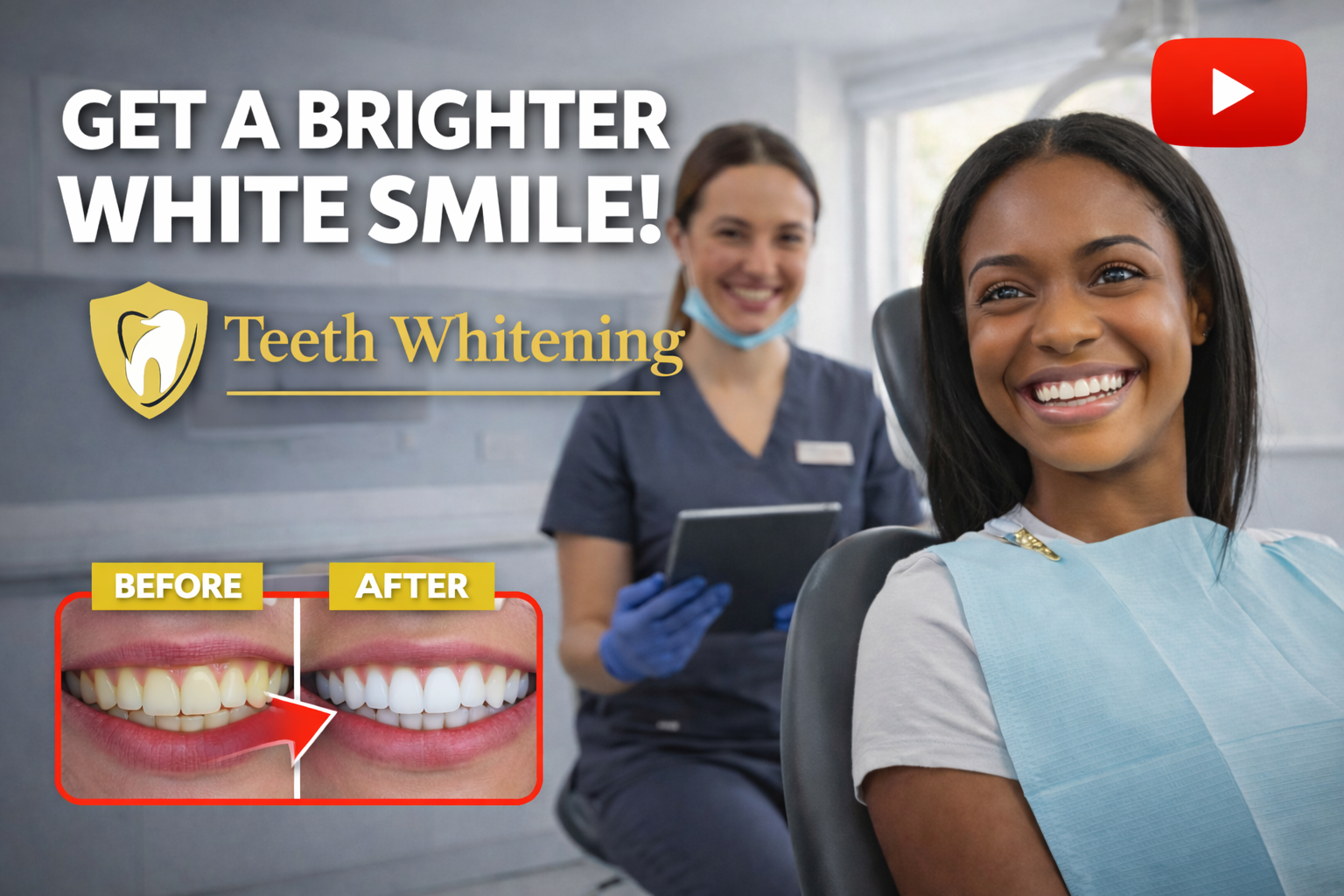
If you want to see visual proof, our before-and-after gallery shows actual cases (with client permission). Many clients say the improvement is subtle in person but dramatic in photos — because the new shade looks more even and reflective of the underlying enamel health.
Aftercare — The White Diet, Maintenance, and Practical Tips
Aftercare is where many people make or break the lasting benefit of whitening. The enamel is temporarily more receptive to pigments for roughly 24–48 hours after treatment; following a short "White Diet" helps lock in the peak shade.
First 48 Hours — The Critical Window
Avoid the following items:
Coffee, tea, red wine, cola and other dark drinks.
Tomato-based sauces, curries with deep pigments, and soy sauce.
Dark berries, beetroots, dark chocolate.
Smoking or vaping — nicotine and tar stain strongly.
Instead prefer pale, low-staining choices (see below).
Recommended Easy Meals for the White Diet
Useful, practical meal ideas you can follow for 48 hours:
Breakfast
Porridge with milk and sliced banana, or scrambled eggs on white toast.
Lunch
Poached chicken breast with plain rice and steamed vegetables (avoiding turmeric or sauces).
Afternoon snack
Plain yoghurt and soft banana.
Dinner
Grilled white fish with boiled potatoes and a cream-based pasta (light cream) or buttered pasta.
Longer-Term Maintenance
To preserve the effect over months:
Rinse with water after dark drinks and foods.
Drink through a straw for coffee or dark beverages where practical (note: frequent straw use has other dental implications; use wisely).
Limit smoking; cessation has a profoundly positive effect on staining.
Consider a short 15–30 minute maintenance top-up or a small at-home kit every 6–12 months depending on lifestyle.
Recommended Oral-Care Products After Whitening
We advise gentle, enamel-friendly daily care:
Soft-bristled toothbrush; gentle technique.
Remineralising toothpaste or serums containing fluoride, calcium, and phosphate.
Avoid highly abrasive whitening toothpastes immediately after treatment for two weeks.
What to Expect in the Hours and Days After Treatment
Some people feel minor tingling or cold sensitivity that fades in 24–48 hours. If sensitivity persists beyond this window or increases, contact your dentist or us.
We always provide detailed aftercare notes and a quick support line for follow-up.
Pricing & Packages — Clear, Transparent Options
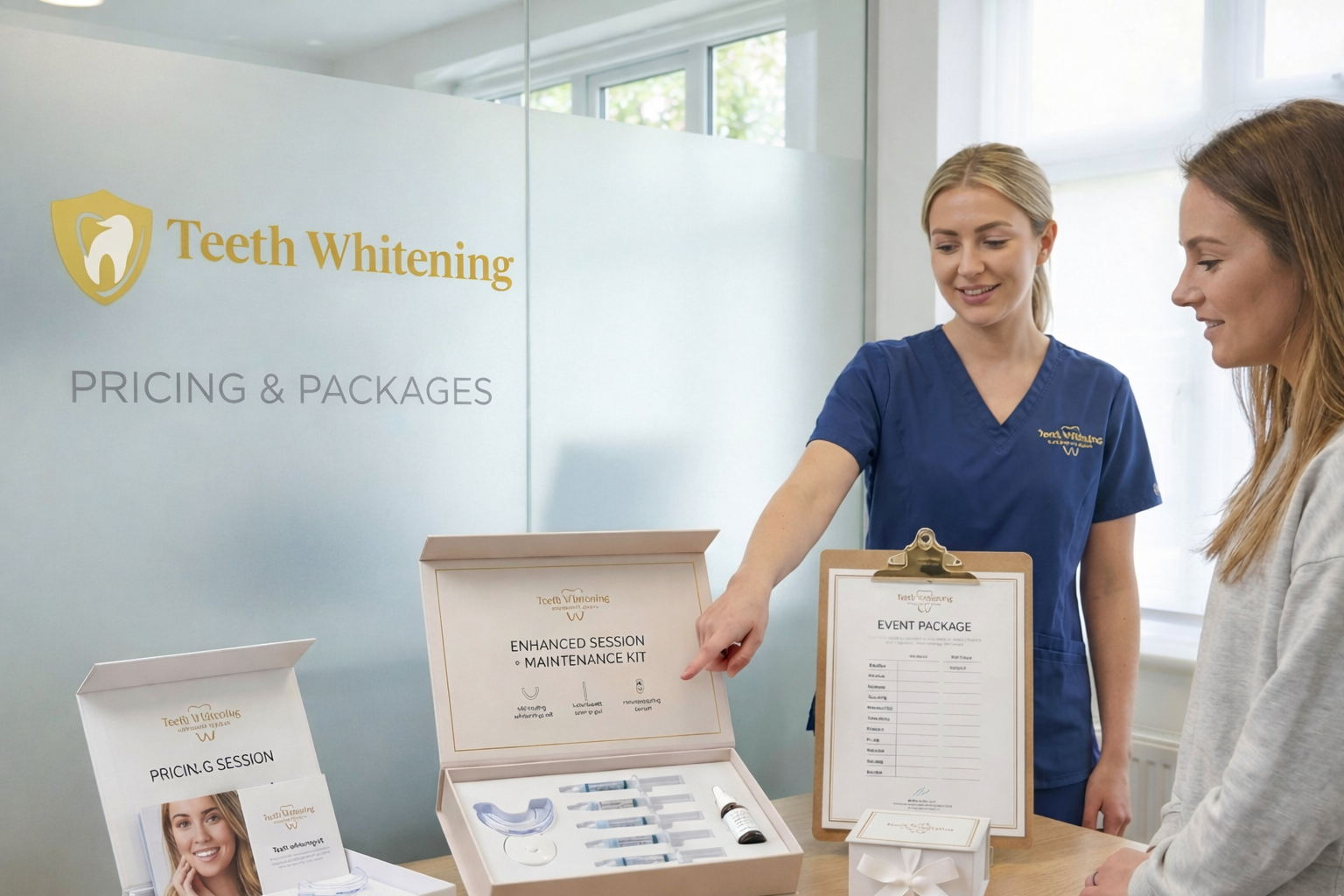
We present straightforward options to accommodate different needs and budgets. Exact pricing may vary by location and included extras; contact us for a real-time price.
Starter Session — Introduction
A 60-minute in-clinic treatment that includes:
Short consultation & shade mapping
Protective gingival barrier and isolation
2–3 LED activation cycles with low-sensitivity gel
Remineralising finish and aftercare guidance
Intro Offer: 50% off for first-time clients.
Enhanced Session + Maintenance Kit
Everything in the Starter Session plus:
Extended activation cycles for stronger initial lift
Take-home top-up gel (low-sensitivity) and remineralising serum
Priority scheduling for a 6–12 month maintenance top-up
Event Package
A tailored plan for weddings, photoshoots, or significant events:
Pre-event shade consultation and scheduling
Optional short top-up close to the event date
Advice for timing and diet to best preserve the peak shade on the day
We aim to be transparent: no surprise fees, clear scope of work, and full explanations before you commit. Payment and booking are confirmed instantly, with secure payment options available.
Frequently Asked Questions — Full Answers
On average results last between 6 and 18 months but depend on diet and habits. People who drink lots of coffee or smoke will notice quicker fading. A short maintenance top-up every 6–12 months helps keep the whitening near its peak.
Most people experience minor or no pain. What some people feel is a transient tingling or increased cold sensitivity that fades within 24–48 hours. We proactively manage sensitivity using buffered gels, shorter cycles, and remineralising serums.
No — restorative materials will not whiten. We'll discuss matching strategies and staged treatment if restorations are in the aesthetic zone. Often the natural teeth can be whitened first, then restorations matched later if desired.
When done professionally and followed by remineralisation, whitening targets stain molecules rather than removing enamel. Clinical evidence supports safety when protocols are followed.
The typical range is 5–12 shades in a single session. The exact lift depends on the initial shade, the type of stain (surface vs intrinsic), and the number of activation cycles used.
Wait around 60 minutes before eating to allow surface pores to begin to stabilise. Then follow the White Diet for the first 24–48 hours.
We use similar clinical-grade technology focused on cosmetic whitening. The difference is specialization and pricing: because we are a focused cosmetic clinic rather than a full dental surgery, we often offer the same cosmetic results with a simpler, more accessible service model. For complex dental concerns we will always involve or recommend a dental surgeon.
Yes — we offer a brief screening consultation. If we find dental health issues we will advise appropriate dental treatment first and can coordinate care.
Most side effects are minor and temporary: short-term sensitivity or gum tenderness if the barrier was not fully protective (rare with proper technique). Any persistent discomfort beyond a few days should be checked by your dentist.
Our goal is a flattering, natural brightness tailored to you. Extremely white "Hollywood" shades are rarely recommended — we aim for a bright, even result that suits your complexion and facial features.
Where We Are — UK & Surrounding Areas
Our clinic is based in UK, and the surrounding. Many clients travel from the surrounding region because they prefer our specialized, low-sensitivity cosmetic approach.
Practical Details
Parking: Ample local parking is available near the clinic. Exact instructions are given on the booking confirmation. Transport: UK has good train links to London and the south coast, making early morning or evening appointments accessible for commuters. Accessibility: The treatment room is designed to be welcoming and relaxed with step-free access — contact us if you have specific accessibility needs so we can prepare.
Trust & Professional Standards
We are committed to safe practice and transparent information. Our team uses professional-grade equipment, follows evidence-based protocols, and receives ongoing training in patient care and sensitivity management.
Qualifications & Training
Our clinicians are trained in cosmetic whitening protocols and patient safety. When appropriate, we work closely with registered dental professionals for cases that require clinical dentistry alongside cosmetic care.
Data Protection, Privacy & Consent
We collect minimal personal information needed to book and deliver care. Consent for treatment is taken in writing before any procedure. We maintain privacy and data security consistent with local regulations.
Ready to Brighten Your Smile?
Booking is simple: choose a time that suits you, fill in basic details, and receive instant confirmation. We accept secure online payment and provide a clear pre-appointment checklist so you know what to expect.
What to Bring to Your Appointment
List of current medications (if any).
Details of any dental restorations (if known).
Comfortable clothing — you'll be reclined in a relaxed treatment room.
Rescheduling & Cancellations
We understand life is busy. Our booking terms include flexible rescheduling where possible; cancellation policies are explained at the time of booking and designed to be fair.
What People Say — Honest Client Voices
Sarah, 34 — Marketing Executive: "I drink three flat whites a day and have resigned myself to dull teeth. The difference after a single session was more than cosmetic — I felt lighter in photos and less self-conscious on video calls. The clinician was reassuring and explained everything simply."
James, 29 — Groom-to-be: "I was nervous because of sensitivity, but the team used a gentler cycle and a desensitiser. I noticed a 10-shade change and felt zero pain. Our wedding photos look brilliant."
Maya, 46 — Teacher: "I love spicy food, but wanted a cleaner smile. The team's aftercare advice was practical, and I saw a real change without discomfort."
We collect testimonials with client permission. If you'd like to see before-and-after images, we can show anonymised galleries at the clinic or online via a secure gallery link.
Our Services — Tailored to Your Needs
We offer flexible, professional teeth whitening options designed for every timeline and preference.
Watch How It Works
See our professional teeth whitening process in action – from consultation to your brighter smile in just 60 minutes.
Monday–Friday: 9:00 AM – 7:00 PM Saturday: 9:00 AM – 4:00 PM Sunday: Closed
Location
UK
Legal & Safety Notes (Concise)
As a precaution, we do not provide whitening to pregnant or breastfeeding clients. Clients with untreated cavities, active periodontal disease, or recent oral surgery should consider a dental review before cosmetic whitening. We always document baseline shade and informed consent.
A Simple, Effective Confidence Boost
A brighter smile is a small, often underestimated boost. Clinic-grade whitening in UK prioritises real results and comfort. The method focuses on oxidation of stain molecules rather than abrasive surface removal, uses buffered low-sensitivity gels and cold LED activation, and finishes with remineralisation to minimise sensitivity and support enamel health.
If you want a natural-looking lift that helps you feel better in photos, meetings, and everyday moments, a single, carefully administered session often provides precisely that — a clear, measurable improvement in about an hour.
We base our approach on clear protocols, a human-centred clinic experience, and well-explained aftercare. If you'd like, we can also provide written advice for event timing, maintenance plans, or a staged approach if you have restorations that require later matching.